BST109pr Blue Star Thunderegg Specimen Pair
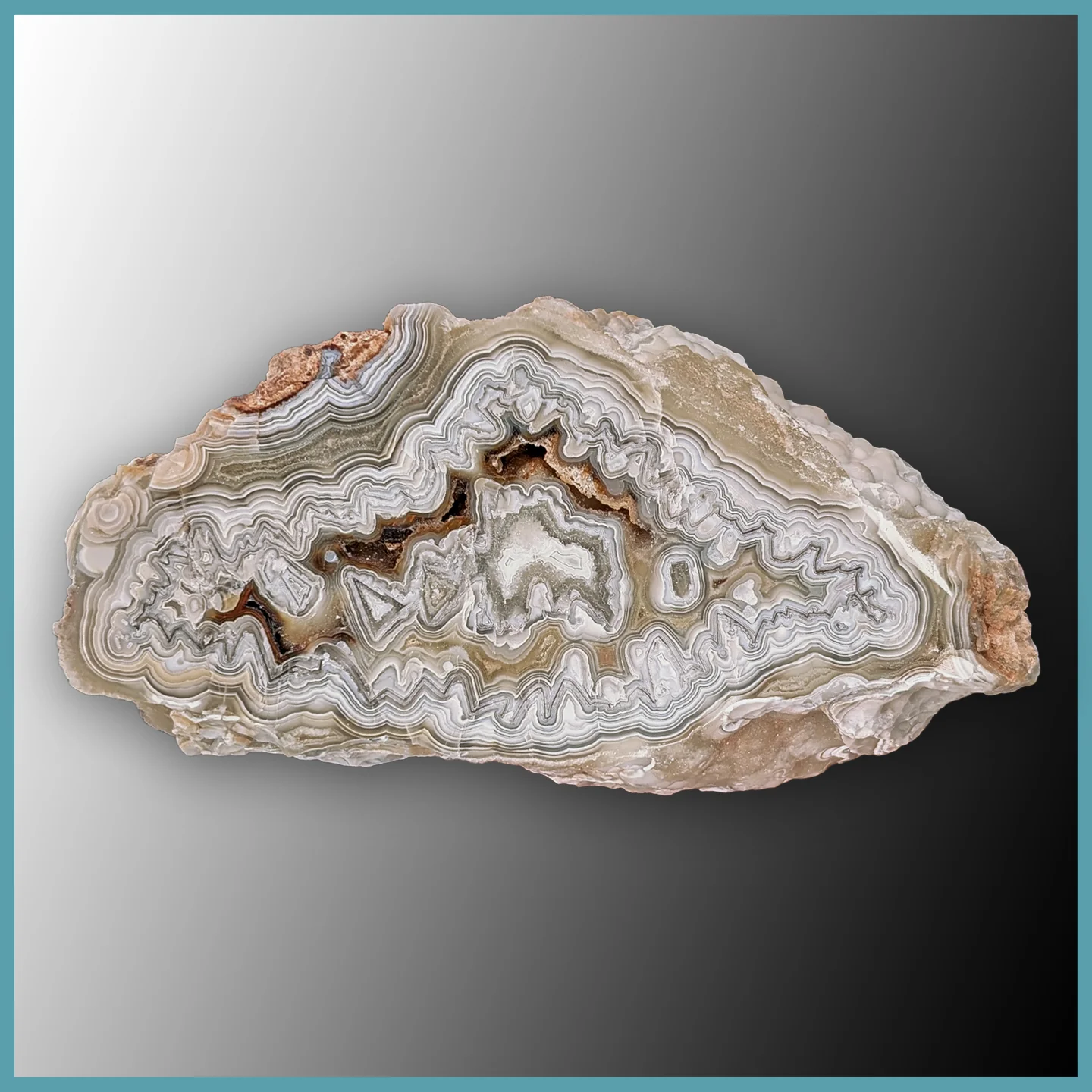
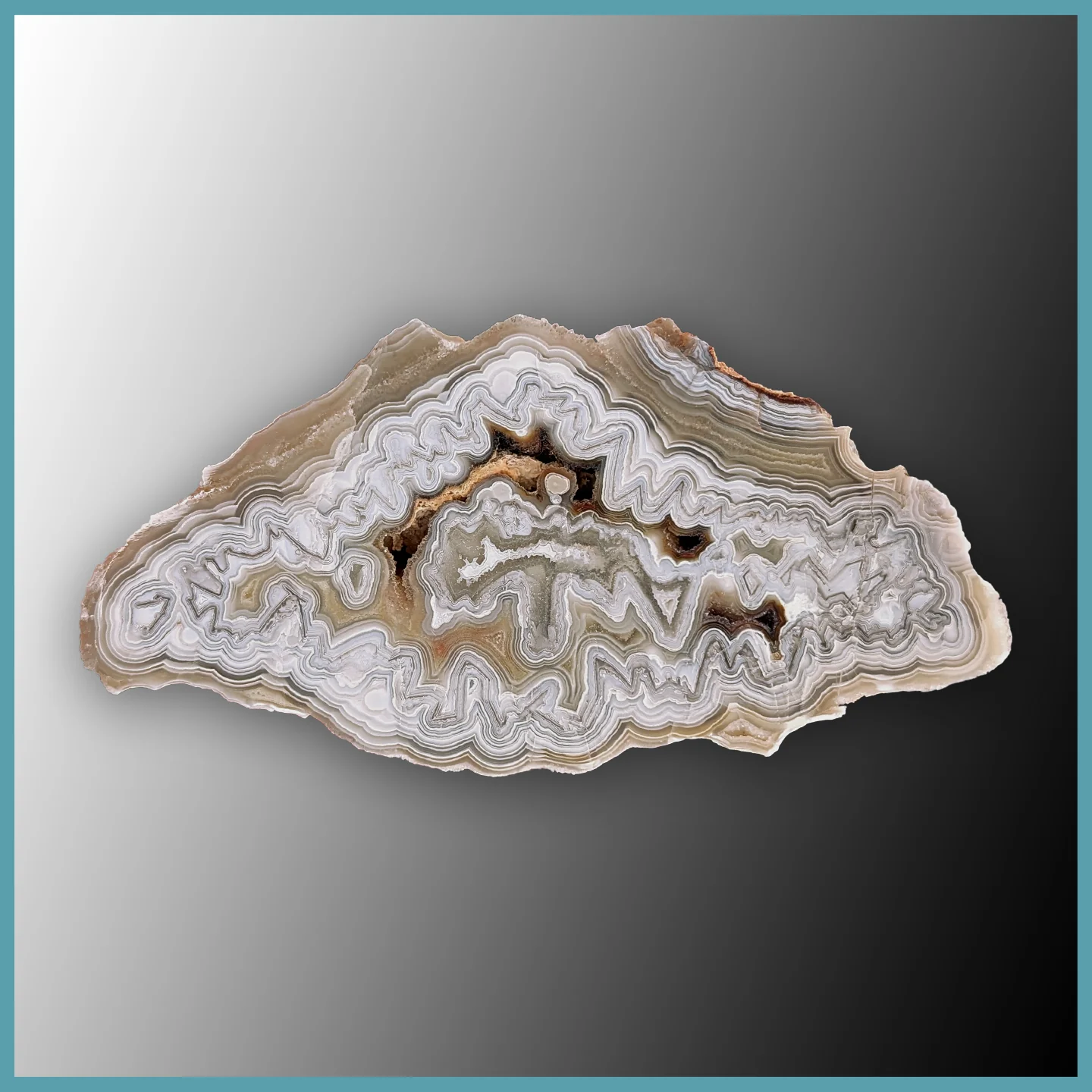
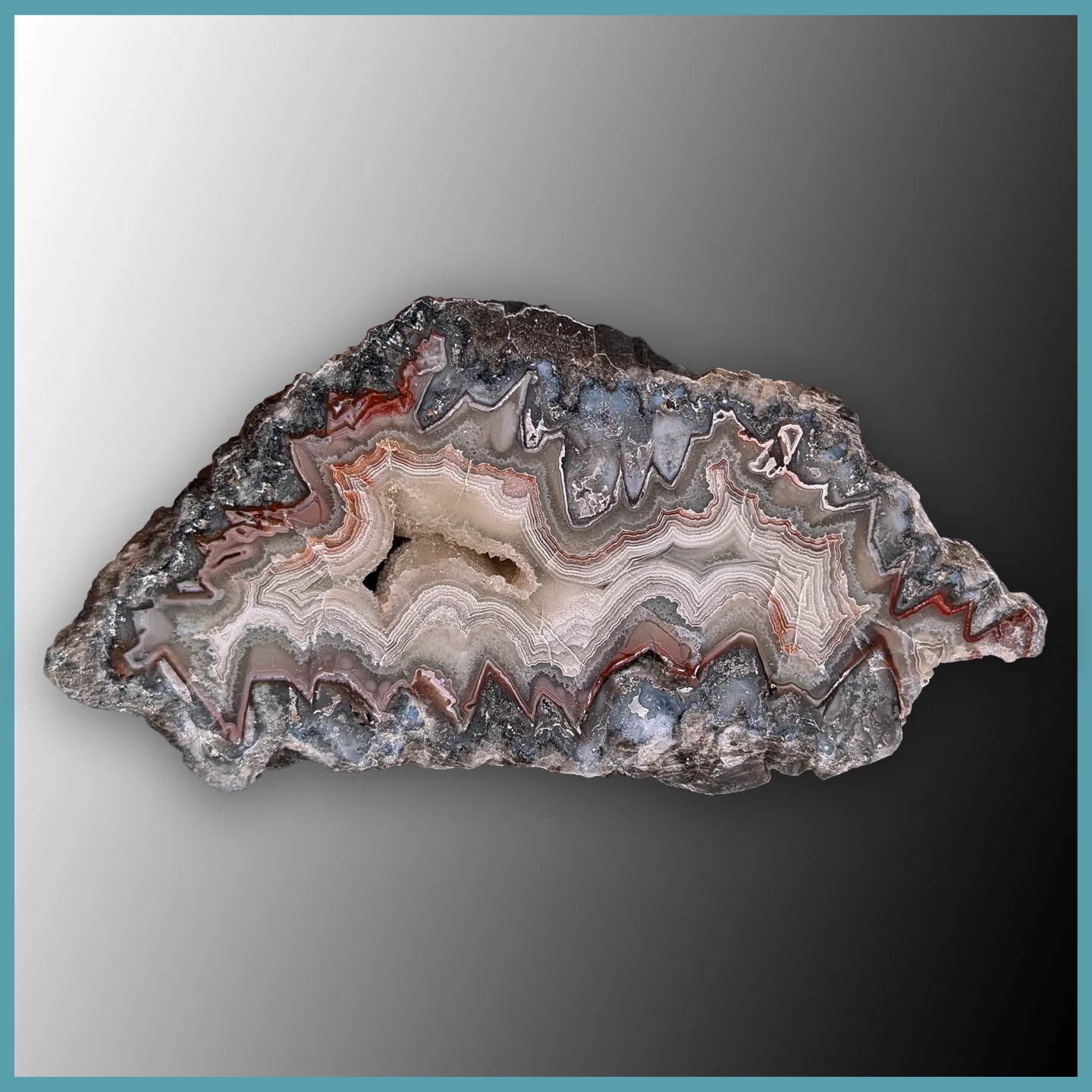
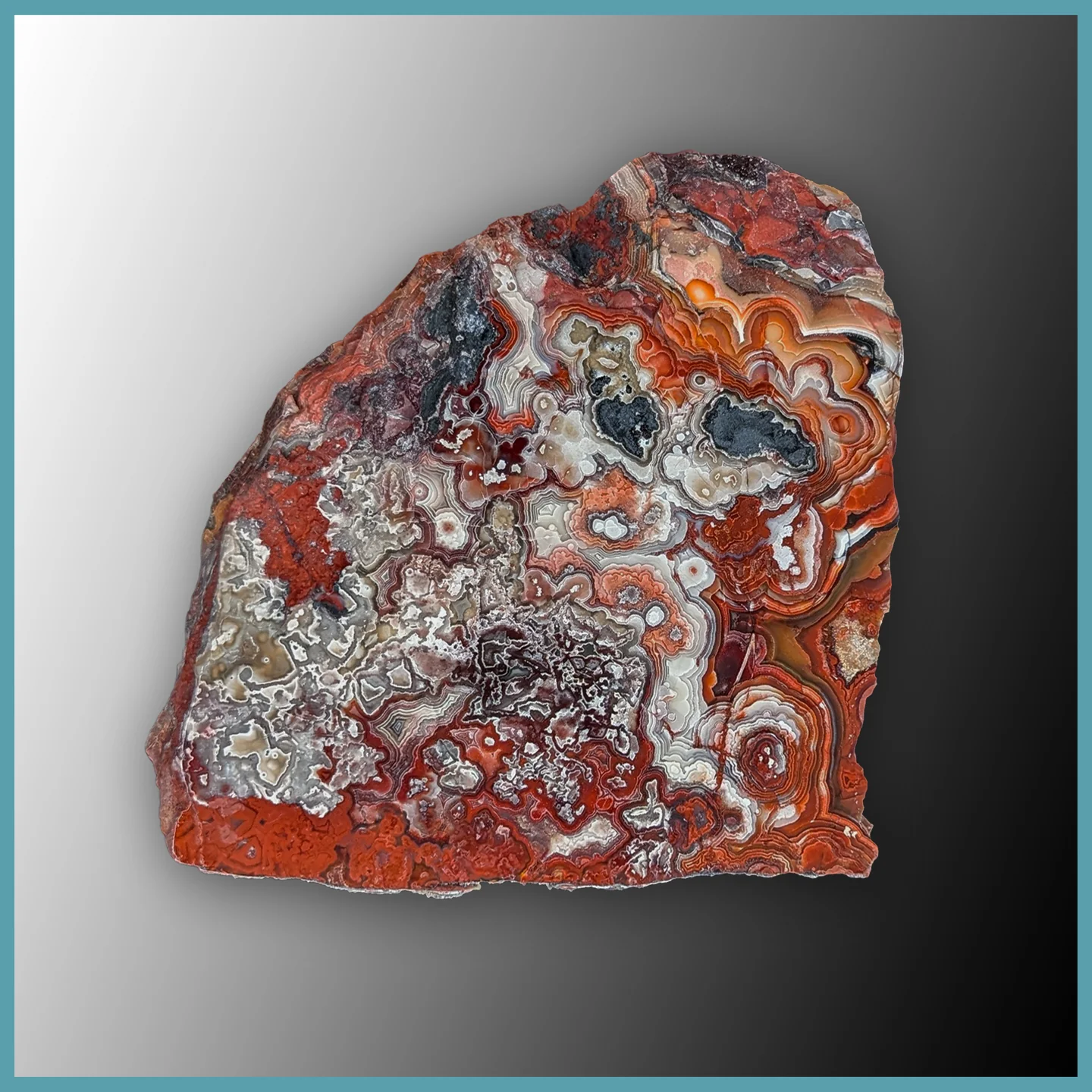
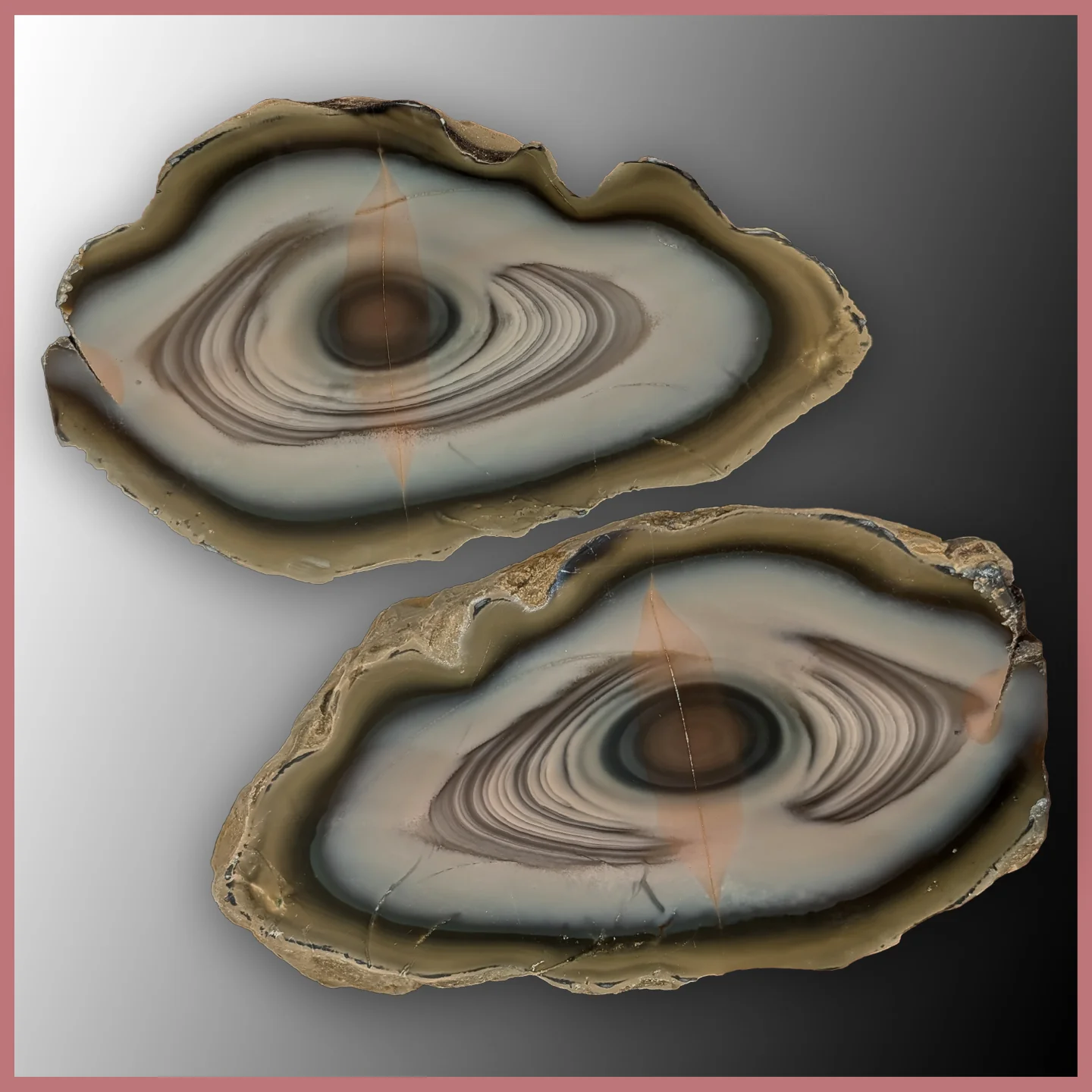
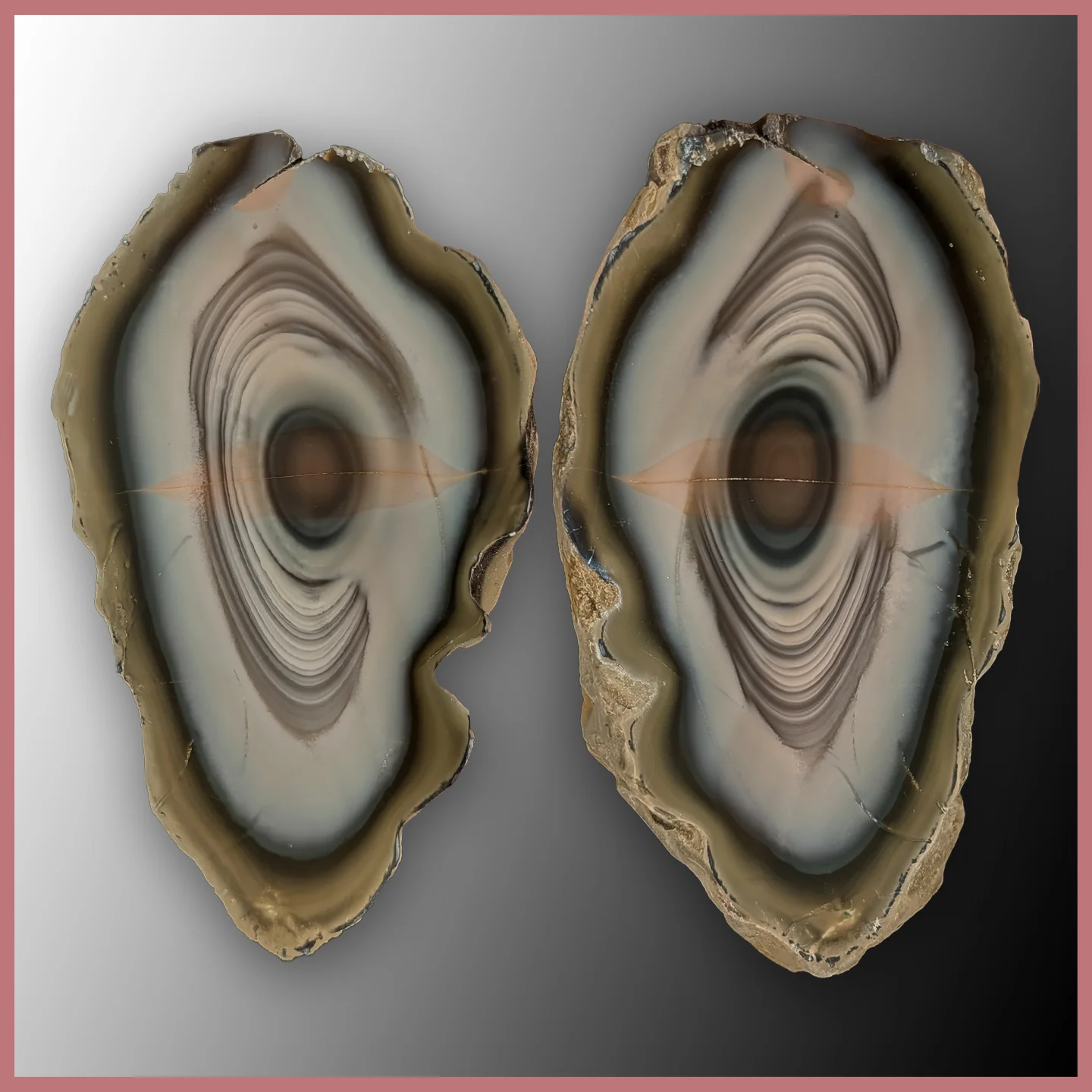
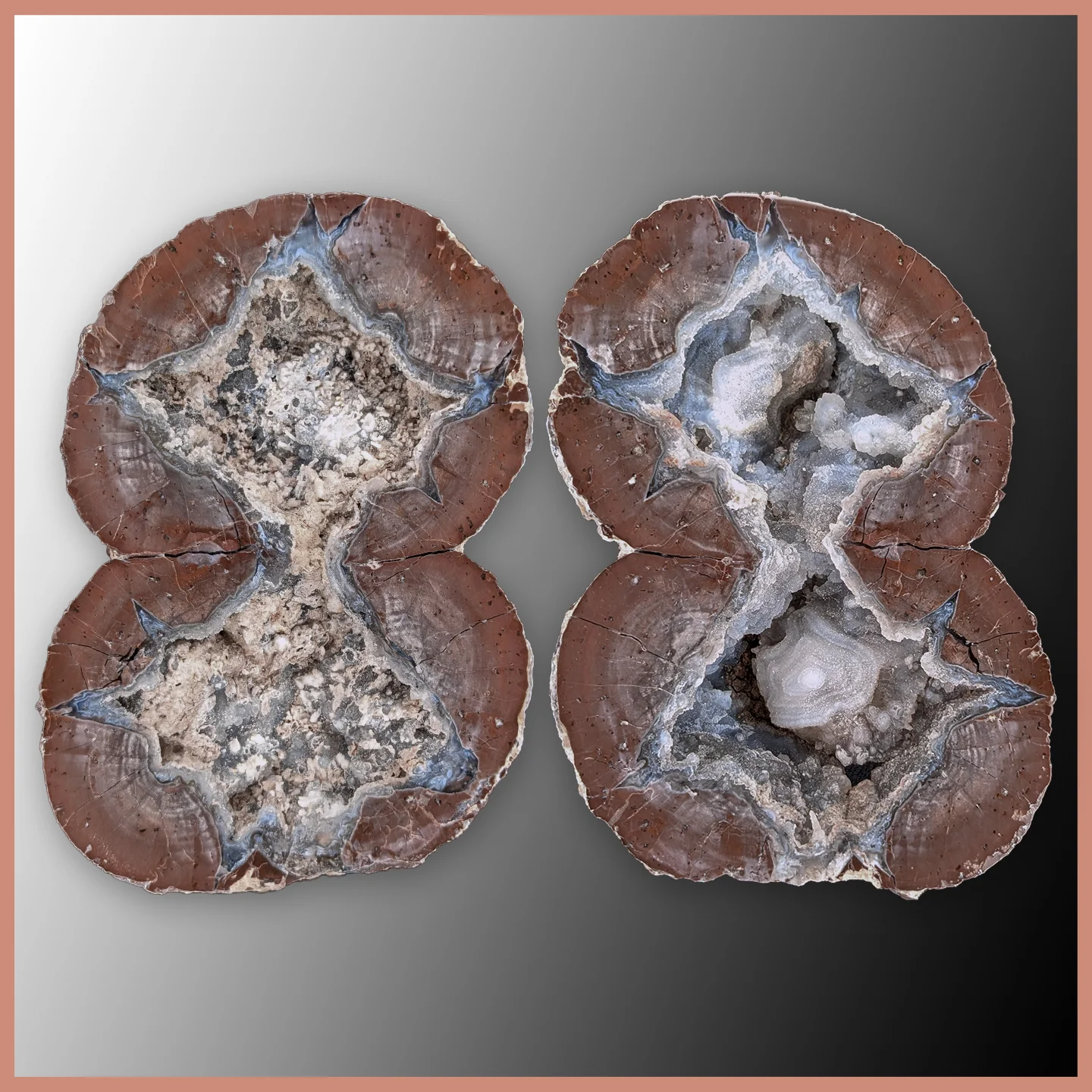
These polished halves of a large Blue Star Thunderegg show two fused open cavities revealing botryoidal chalcedony formations coated in sparkling druzy, with one half having secondary mineral growth over the small crystals and the other having a small hole from the cavity extending all the way to the edge of the crust. The open cavities are lined with agate showing light blue feathery banding, and have many distinct pointed star points that extend towards the edges of the nodule. Gray and brown rhyolite form the rest of the double egg shape.
The chalcedony shows green fluorescence under 365nm ultraviolet light.
Polished Surface: 16.3cm x 11.3cm and 16.2cm x 11.6cm
Approx. 1.75" and 2" deep
4lb 2.3oz
Blue Star Thundereggs are a recent find out of Sonora, Mexico. They have a dark grayish to reddish brown outer rind with blue chalcedony inside, typically with a prevalent classic thunderegg star pattern. Many nodules are only partially filled, revealing open inner cavities showing botryoidal formations of chalcedony and crystal druzy inside.
Original: $190.00
-65%$190.00
$66.50Product Information
Product Information
Shipping & Returns
Shipping & Returns
Description
These polished halves of a large Blue Star Thunderegg show two fused open cavities revealing botryoidal chalcedony formations coated in sparkling druzy, with one half having secondary mineral growth over the small crystals and the other having a small hole from the cavity extending all the way to the edge of the crust. The open cavities are lined with agate showing light blue feathery banding, and have many distinct pointed star points that extend towards the edges of the nodule. Gray and brown rhyolite form the rest of the double egg shape.
The chalcedony shows green fluorescence under 365nm ultraviolet light.
Polished Surface: 16.3cm x 11.3cm and 16.2cm x 11.6cm
Approx. 1.75" and 2" deep
4lb 2.3oz
Blue Star Thundereggs are a recent find out of Sonora, Mexico. They have a dark grayish to reddish brown outer rind with blue chalcedony inside, typically with a prevalent classic thunderegg star pattern. Many nodules are only partially filled, revealing open inner cavities showing botryoidal formations of chalcedony and crystal druzy inside.